— Scalp · 01
Korean head spa questions.
The head spa room is worked by the studio's five therapists, and the owner learned the treatment where it comes from — Fiona lived in South Korea for about thirteen years and still returns each year for continuing education. Her interview with VoyageMinnesota tells that story in her own words. The Japanese and Korean traditions sit inside the same appointment here, which is why the menu names both. The head spa page walks through an hour of it start to finish.
14 questions
What is a Korean head spa?
+
A Korean head spa is a treatment for the scalp — the skin your hair grows out of. A session moves through deep cleansing to lift oil and product buildup, exfoliation to clear the skin around the follicles, a long scalp massage, and a finish with serums, masks or oils. The style originated in Japan and was refined in Korea, and the two traditions are close enough that most studios — including this one — draw on both.
How is a head spa different from getting your hair washed at a salon?
+
A salon shampoo cleans hair; a head spa treats the scalp underneath it. The difference shows up in three places: the scalp is looked at before anything is chosen, the cleanse is staged, and the massage runs for a large share of the hour instead of the two minutes a basin allows.
How long does a head spa take?
+
60 min. Combinations run longer — 90 min when a facial is added, 120 min for head spa, facial and massage together.
How much does a head spa cost in Coon Rapids?
+
$130 for the 60 min Korean–Japanese Head Spa, and $152 if your hair is longer or thicker — that second price is not a surcharge for being difficult, it is a longer appointment. Combinations start at $185.
Can two people have a head spa at the same time?
+
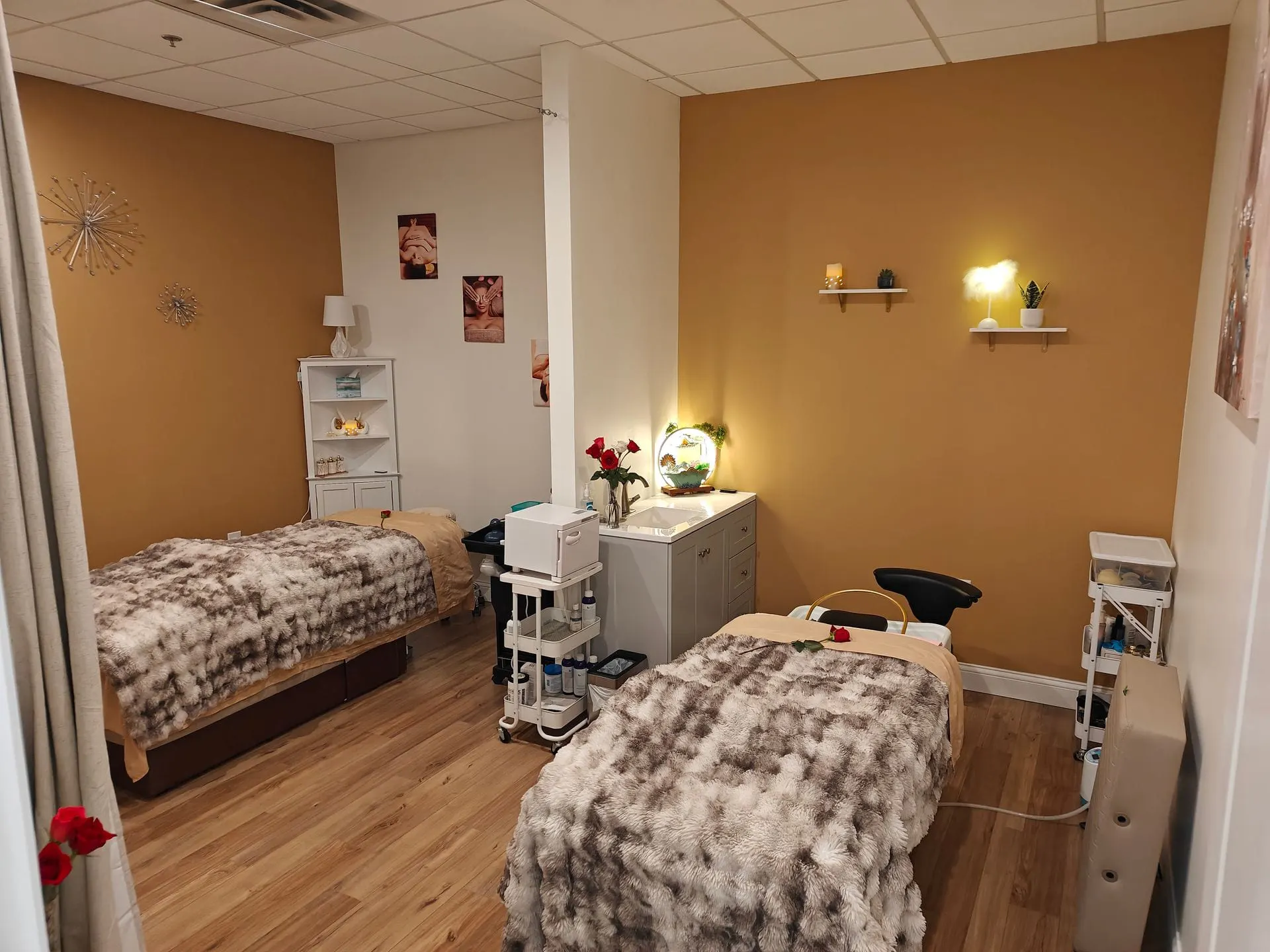
Yes. Both head spa tables sit in one joinable room, so couples, friends and small groups book together. A full-height privacy curtain divides the room when two guests would rather not share the space, so the same room works either way.
What does a head spa actually do?
+
It gives you a properly clean scalp and an hour of genuine quiet. Buildup that shampoo leaves behind is lifted, the scalp is hydrated, and the massage relieves the tightness that collects across the scalp, neck and shoulders. Hair usually feels softer and looks shinier afterwards because the scalp it grows from is clean.
Can a head spa help with hair loss?
+
A head spa is not a medical treatment for hair loss and is not offered as one. Keeping the scalp clean and comfortable supports the environment hair grows in, which is a reasonable thing to want. If you are losing hair noticeably, see a dermatologist first — the two are not in competition, and knowing the cause makes everything else more useful.
Which hair types is a head spa suitable for?
+
Head spa treatments can be customized for many hair and scalp types, including straight, wavy, curly, fine, thick and color-treated hair. Please let us know about recent chemical or color services when booking.
How often should you get a head spa?
+
Frequency depends on your scalp, hair, product use and goals. Your provider can recommend a schedule after seeing your scalp.
Will a head spa strip my hair colour?
+
A standard head spa should not noticeably affect professionally applied colour, though deep-cleansing treatments can contribute to fading over time. Tell your therapist if you have coloured your hair recently and the cleanse is adjusted.
Should I wash my hair before I come?
+
No. The scalp is assessed as it normally is, and your hair is washed during the treatment. Arriving freshly washed hides the thing the therapist is trying to see.
Does a head spa hurt?
+
No. The pressure is firm enough to feel like a massage and never sharp. Say so if a spot is tender — sensitivity around the hairline and behind the ears is common and easy to work around.
Is there any reason to reschedule?
+
Yes, four: open cuts or wounds on the scalp, a contagious scalp infection, a bad scalp sunburn, and recent scalp surgery or a medical procedure unless your doctor has cleared it. Call and move the appointment — there is no charge for rescheduling with notice.
What does it feel like afterwards?
+
Lighter. A cleaner, less tight scalp, softer hair, and the loose-shouldered feeling that comes after any good massage. Your hair is blow-dried before you leave, so you can go straight back out.